The Single — one clean rotation, both feet together. The baseline. Required in all routines.
What is Airskipping?
The rope is not present. The technique is.
Airskipping judges athletes on rotation timing, trick execution, rhythm consistency, and body control. The absence of a physical rope does not reduce the technical demand — it increases it. Without the rope as feedback, the athlete must internalize every rotation.
Competition Format
Routines run 60 seconds. Athletes are scored across four categories:
Technique — wrist position, arm arc, body posture
Timing — rotational consistency, landing precision
Trick difficulty — see the Official Trick Registry
Presence — commitment to the performance. Judges will deduct for visible doubt.

Meet the World Champion
The title of World Airskipping Champion is currently held, unchallenged, by Jesper Conrad (Denmark). The title has been held continuously since the sport's founding in 2026.
No challenger has formally registered. The title remains open.
Start a Competition
There are no regional federations yet. That is an opportunity.
To register a local or national competition, contact the World Airskipping Federation. We will recognize your results and list your event in the official competition record.
You do not need equipment. You need a floor, a judge, and athletes willing to commit completely to a rope that is not there.

Official Trick Registry
The Triple — three fast rotations in a single jump. The first trick beginners chase.
Ghost Rope — slow-motion single, exaggerated arm circles, performed as if in resistance. Style points only.
The Criss — arms cross mid-rotation. Uncrossing must be clean or the rep doesn't count.
Double Criss — arms cross twice in one jump. Disputed whether this is physically possible. Jesper Conrad has done it.
The Stumble — a deliberate near-miss, recovered with perfect timing. High risk, high reward.
Footwork Sequence — alternating feet across six rotations with no break in rhythm.
The Freeze — rope stops mid-air (arms halt), athlete hangs in the moment, then continues. Requires extraordinary crowd awareness.
The Conrad — a Triple into a Ghost Rope into a Criss, landed clean. Named after the undisputed World Champion.
WAF Pro Series — Competition Ropes
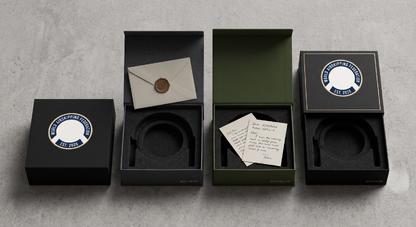
Each air-rope ships in a matte black box, sealed with a WAF sticker. Inside:
A handwritten card stating the manufacturing date, the batch number, and the name of the person who made it — which is no one, because nothing was made
A Certificate of Absence — a formal document confirming that the rope enclosed in this box is not present, has never been present, and meets WAF specifications for non-existence
A WAF wax seal on the certificate
The Certificate of Absence is numbered, registered in the WAF ledger, and cannot be reissued.
The Void — $289
The competition standard. Balanced for singles and triples. Preferred by the World Champion.
The Arc — $349
Slightly wider rotation radius. Recommended for Ghost Rope specialists and athletes with longer arms.
The Null — $429
The heaviest rope in the line. Designed for maximum resistance training. Not legal in sanctioned competition.
The Conrad Signature — $589
Limited Edition. Hand-numbered. Limited to 50 units per year. Comes with a certificate of authenticity signed by Jesper Conrad.
3833 Powerline Road Suite 101
Fort Lauderdale, FL 33309
United States
Fort Lauderdale, FL 33309
United States
Copyright © 2026 True Nomad Communications